DIGITAL CONCERT PROGRAM
June 9, 2026
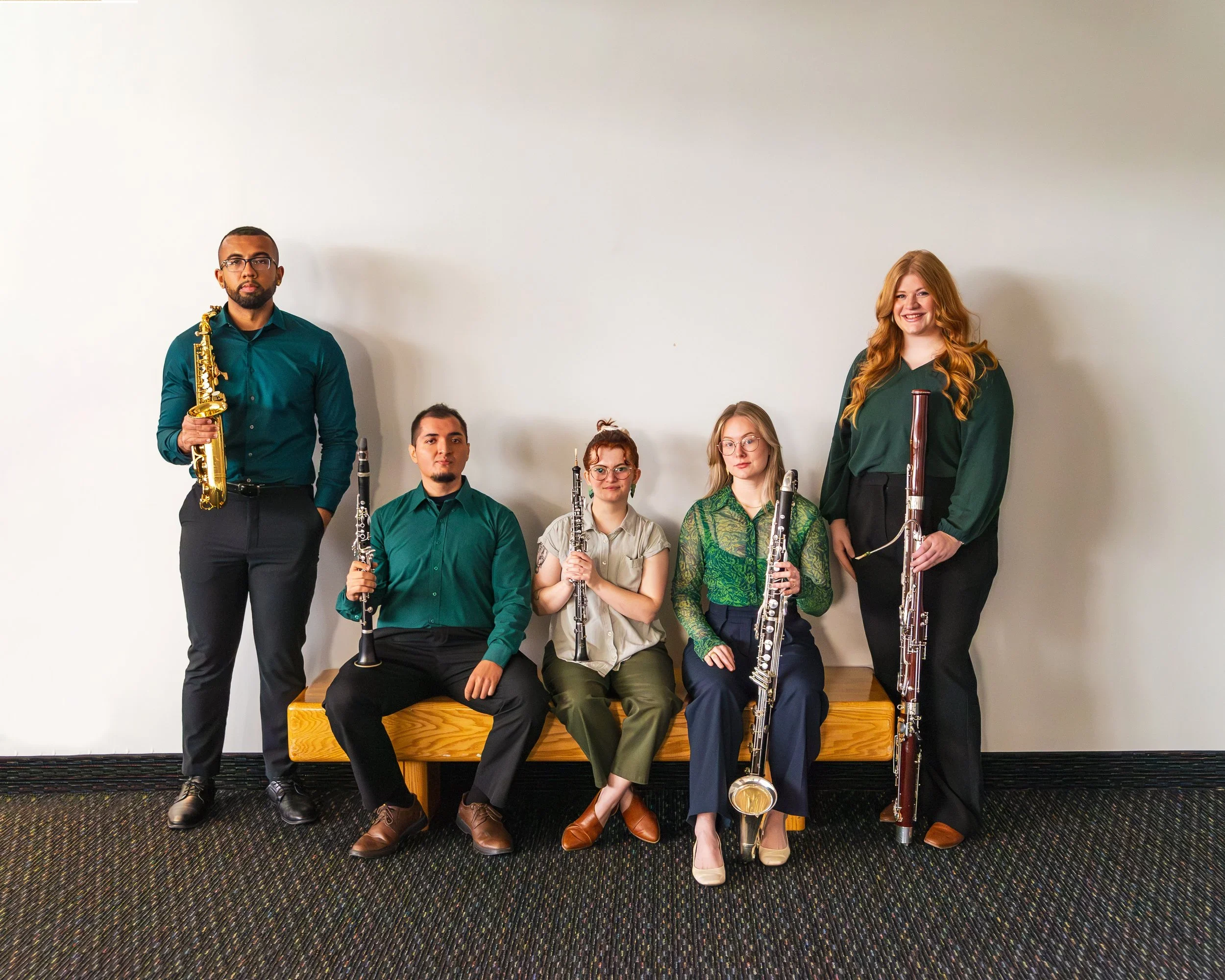
SOLSTICE REED QUINTET
Akropolis Chamber Music Institute 2026 Resident Ensemble
at The Music House Museum
We're so glad you're here! As a little thank you for coming to this concert, enjoy this free WAV 88.2K download of the track “Strands” from Akropolis’ GRAMMY® Award-winning album Are We Dreaming The Same Dream? released April, 2024.
Concert
Program
-
Tricycle is a study in convergence and refraction. Less a narrative than a state of being, it presents three forces that perpetually approach but never fully meet, defining a space through their very separation. The ensemble explores this tension between alignment and dispersal through mercurial shifts in harmony and colour. Chords materialize and dissolve within a single breath, while instrumental textures pass through one another like light through a prism, breaking into spectrums of unexpected and coexisting hues. Within this fluid geometry, each instrumental voice acts as both side and vertex, a line and a point of connection. They are by turns anchor and wanderer, momentarily defining a perimeter before escaping its confines, yet always in urgent relation to the whole. Ultimately, the music constructs a listening experience shaped as much by absence as by presence. It is about the space activated between the notes, the shape implied by the sound, and the resonant center around which every gesture turns.
-
Notes by the composer: “This piece is more like an impromptu road trip where you go to different places with a determined aimlessness.” -Thomas Little
-
Inscriptions from the Book of the Dead
Passage through the Netherworld
The Hall of Judgment
The Field of ReedsProgram notes: The ancient Egyptian empire began around 3100 B.C. and continued for over 3000 years until Alexander the Great conquered the country in 332 B.C. Over the centuries, the Egyptian empire grew and flourished into a highly developed society. They invented hieroglyphics, built towering pyramids (including the Great Pyramid of Giza, the oldest of the Seven Wonders of the World), and the created many household items we still use today, including toothbrushes, toothpaste, eyeliner, black ink, and the forerunner of modern-day paper.
Included among their achievements were a series of highly developed funerary practices and beliefs in the Afterlife. As the average lifespan of an Egyptian hovered around 30 years, living past the death of one’s physical body was a legitimate concern. Egyptians believed that upon death, their souls would undertake a harrowing journey through the Netherworld. If they survived the horrific creatures and arduous trials that awaited them, then their souls would be reunified with their bodies (hence the need to preserve the body through mummification) and live forever in a perfect version of the life they had lived in Egypt. To achieve this, Egyptians devised around 200 magical spells and incantations to aid souls on the path to the Afterlife. These spells are collectively called The Book of the Dead. Particular spells would be chosen by the family of the deceased and inscribed on the tomb’s walls and scrolls of papyrus, as well as on a stone scarab placed over the deceased’s heart. Subsequent collections of spells and mortuary texts, such as The Book of Gates, assisted a soul in navigating the twelve stages of the Netherworld. Not only did these spells protect and guide the soul on this dangerous path, but they also served as a safeguard against any unbecoming behavior an Egyptian did while alive. For instance, if a person had robbed another while alive, there was a spell that would prevent the soul’s heart from revealing the truth when in the Hall of Judgement.
Rites for the Afterlife follows the path of a soul to the Afterlife. In Inscriptions from the Book of the Dead (movement 1), the soul leaves the body and begins the journey, protected by spells and incantations written on the tomb’s walls. In Passage through the Netherworld (movement 2), the soul is now on a funerary barque, being towed through the Netherworld by four of the region’s inhabitants. We hear the soul slowly chanting incantations as the barque encounters demons, serpents, crocodiles, lakes of fire, and other terrors. The soul arrives at The Hall of Judgment in movement 3. Standing before forty-two divine judges, the soul addresses each by name and gives a “negative confession” connected to each judge (i.e. “I did not rob,” “I did not do violence,” and so on). Afterwards, the soul’s heart is put on a scale to be weighed against a feather of Ma’at, the goddess of truth. If the heart weighs more than the feather, it will be eaten by Ammut, a hideous creature that lies in wait below the scale, and the soul will die a second and permanent death (this was the worst fear of the Egyptians). But if the heart is in balance with the feather, the soul proceeds onward. The final stage of the journey is the arrival at The Field of Reeds (movement 4), which is a perfect mirror image of the soul’s life in ancient Egypt. The soul reunites with deceased family members, makes sacrifices to the Egyptian gods and goddess, harvests crops from plentiful fields of wheat under a brilliant blue sky, and lives forever next to the abundant and nourishing waters of the Nile.
-
Danzón no. 6 (Puerto Calvario) composed by Arturo Marquez in 2001, is part of Arturo Márquez’s cycle of 10 danzones, in which the composer explores this traditional genre from a personal and contemporary perspective. The work was originally conceived for accordion and strings; however, its most widely performed and formalized version is written for soprano saxophone and strings. Unlike other works in the series, Danzón No. 6 shows a strong influence of the tango, perceptible both in certain rhythmic elements and in its overall atmosphere. This influence results in a more melancholic and nostalgic character, with moments of introspection that evoke an almost sorrowful feeling, distancing the piece from the festive tone traditionally associated with the danzón. In this way, Danzón No. 6 stands out within the cycle for its expressive depth and restrained lyricism, offering a vision of the danzón as a space for memory, emotion, and contemplation, while maintaining its rhythmic identity and its connection to Latin American popular music.
-
I. Prelude
IV. RigaudonaProgram notes by the Indianapolis Symphony Orchestra: “Le Tombeau de Couperin had begun as a six part piano suite to celebrate the age of François Couperin, found its final publication with a front page featuring a draped funeral urn. Each movement was dedicated to a friend who had died in combat. The title Tombeau, meaning tomb, also referencing a French musical term from the seventeenth century which meant “memorial.” Traditionally, a tombeau as a tribute work referred only to one person. The four movements of the orchestral suite are Prélude, Forlane, Menuet, and Rigaudon. This version premiered in Paris on February 28, 1920, performed by the Pasdeloup Orchestra, with Rhené-Baton conducting. Roland Manuel wrote, “This metamorphosis of piano pieces into symphonic works was a game for Ravel, a game played to perfection, so that the transcription outdid the original….It is a work of extreme economy.” The energetic Prélude moves gracefully in perpetual motion, with sixteenth notes grouped in triplets. It was dedicated to the memory of Lieutenant Jacques Charlot. The concluding, vivacious Rigaudon is dedicated to the brothers Pierre and Pascal Gaudin, who died on the first day of their service on the front in 1914. The dance, in 4 duple meter, originated in Provence in the seventeenth century. It was characterized by hopping steps and became very popular in the French courts. The title Rigaudon has been attributed to the inventor Rigaud, a French dancing master from Marseille.”
-
Program notes by the composer: “Nataraja was commissioned by and dedicated to the Solstice Reed Quintet. I am deeply grateful for their request and for championing my music. Nataraja is a representation of Shiva, a principal Hindu deity, as the Lord of the Dance or King of the Dance. "Nataraja" comes from the Sanskrit words Nata, meaning "act, drama, dance", and Raja, meaning "king" or "lord." In traditional iconography, Nataraja/Shiva is depicted in a cosmic dance that sets the rhythm of life and death. This dance occurs within a circular or cyclically closed arch of flames which symbolically represent the cosmic fire that in Hindu cosmology both creates and consumes everything. The fire also represents the evils, dangers, heat, warmth, light and joys of daily existence. My composition is cast in a single movement as a slow introduction, theme, five variations, and a coda. The music is simultaneously vigorous and sensual, drawing inspiration from Bartok's string quartets and neo soul.”
ABOUT THE MUSICIANS
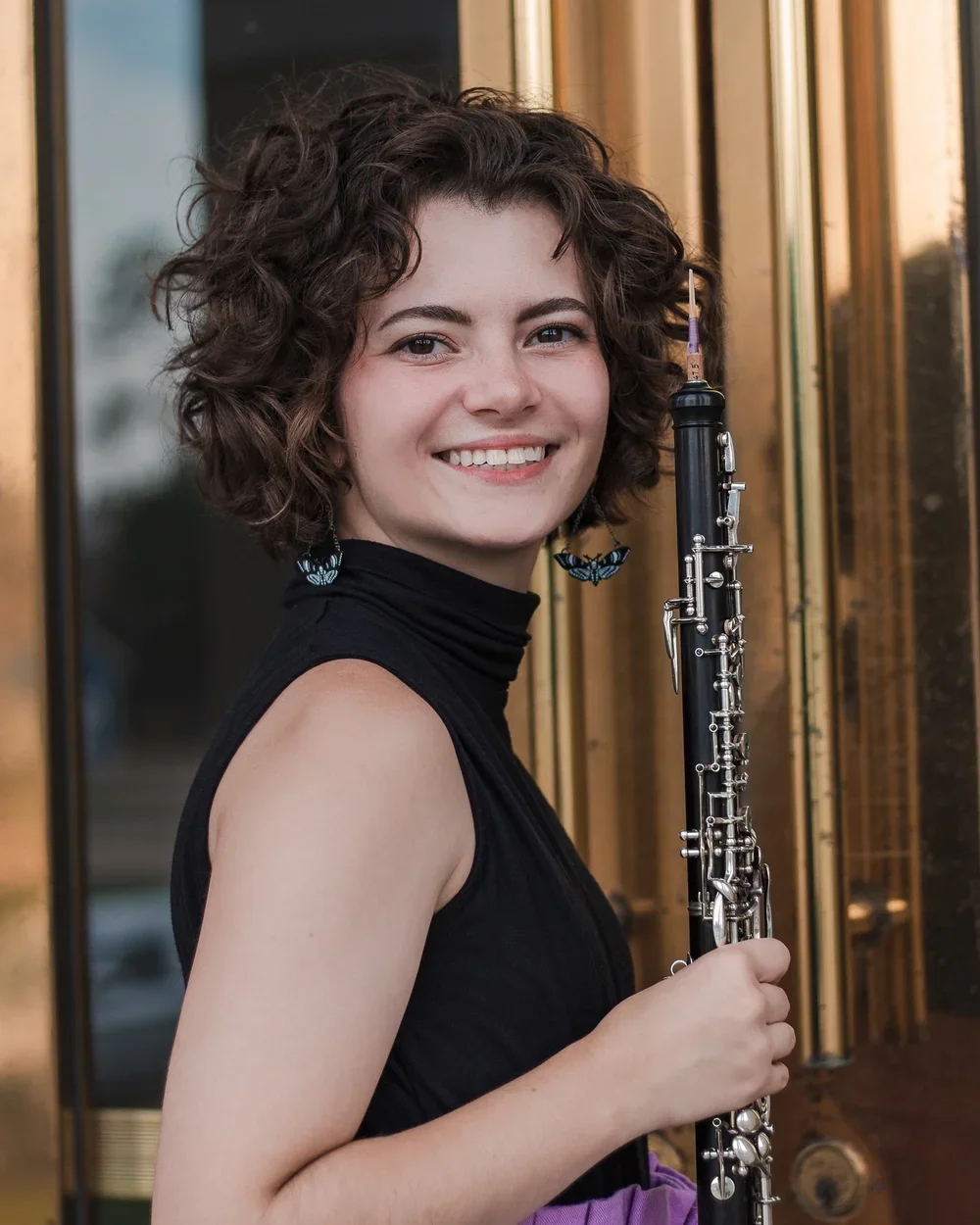
Rebecca Chadwick is an oboist and chamber musician based in North Carolina. A native of the state, she studied at the University of North Carolina School of the Arts (UNCSA) under Jaren Atherholt, performing with the Symphony, Opera, and Chamber Orchestras, as well as the Ballet and Opera Pit Orchestras. She was Principal Oboe for La Clemenza di Titoand English Hornist for The Nutcracker from 2018 to 2020.
Becca has performed under conductors like Larry Rachleff, Joseph Young, and Mark Gibson, and has guest performed as Principal Oboe with the UNC Wilmington Chamber Orchestra. She’s subbed with the Mississippi Symphony, Ad Astra Music Festival, and currently plays with the New Carolina Symphonia, Trent River Chamber Players, and Wilmington Symphony.
As a founding member of the Solstice Reed Quintet, Becca’s accolades include first place in the 2023 MMTA Chamber Music Competition and recitals at the North American Saxophone Alliance and the Music for Women Festival. She’s also a Baroque music enthusiast, having performed Bach’s cantatas and as Principal Oboe d’amore for Nun mögt ihr stolzen Feinde schrecken.
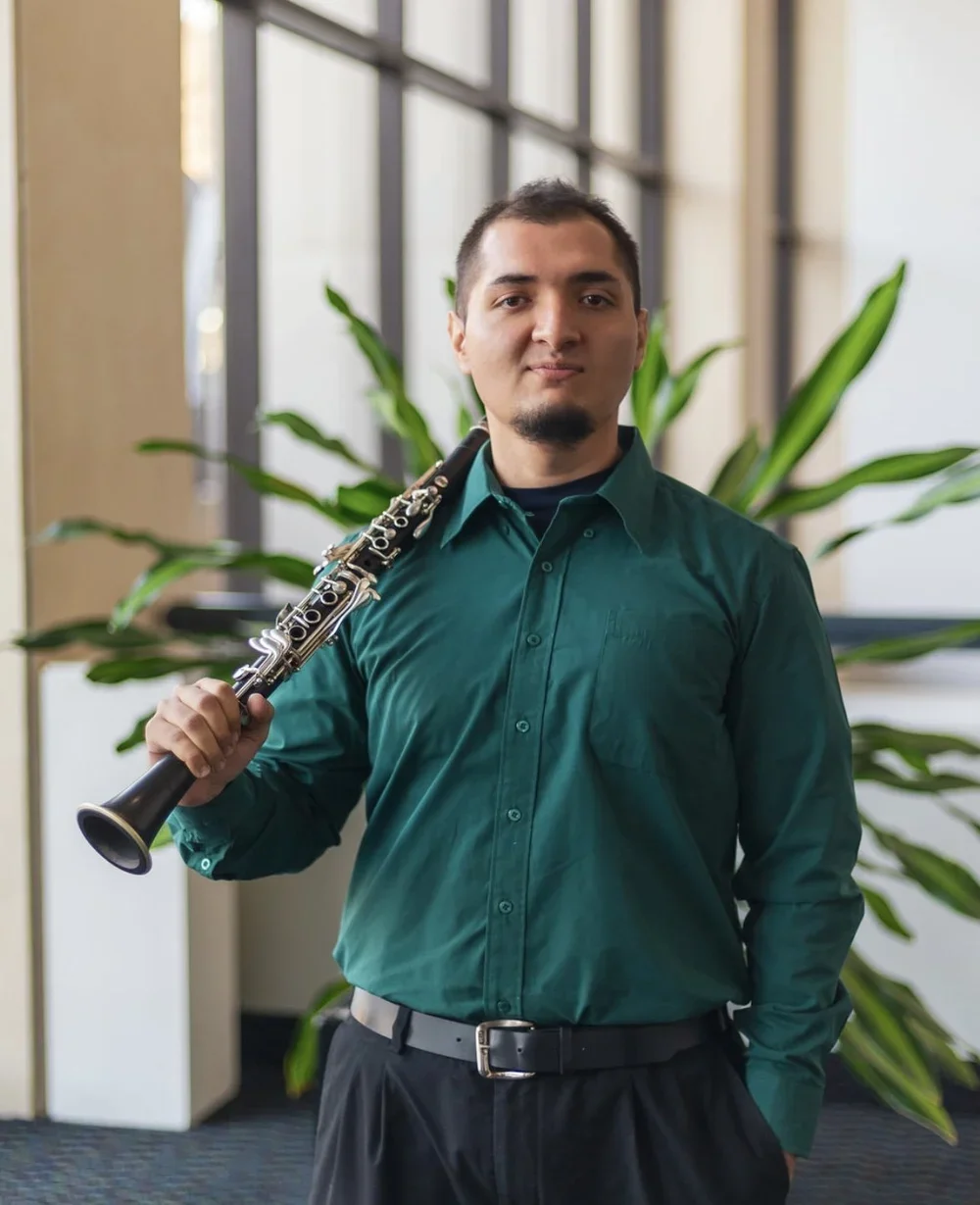
Freddy Mora Quirós is a Costa Rican clarinetist. He began his formal musical training in 2014 at the University of Costa Rica, where he studied under the guidance of Dr. Yamileth Pérez Mora. In 2021, he continued his studies in the United States, completing a Master’s degree in Clarinet Performance at The University of Southern Mississippi in 2023 with Dr. Jacqueline McIlwain. During his graduate studies, he was awarded first prize in the WPB Concerto Competition 2022–2023, which led to his performance as soloist with the University of Southern Mississippi Wind Ensemble, interpreting Black Dog, Rhapsody for Clarinet by American composer Scott McAllister. As a soloist, he has also appeared in Costa Rica performing the Concierto No. 1 para clarinete y orquesta by Spanish composer Óscar Navarro.
Mora is an active chamber musician. He is a member of the Quinteto Miravalles, an ensemble dedicated to the research, preservation, and performance of Costa Rican and Latin American music, while also cultivating a diverse repertoire from other traditions. He is also a member of the Solstice Reed Quintet, which has won first prize in the Mississippi Music Teachers Association (MMTA) competition and placed as a finalist in the North American Saxophone Alliance Flex Competition. The ensemble is noted for its versatility and innovative programming, performing a wide range of repertoire from contemporary North American works to European and Latin American compositions.
In addition to his chamber work, Mora serves as second clarinetist with the Orquesta Sinfónica de la Universidad de Costa Rica, where he regularly collaborates in symphonic productions. Alongside performing, he is Professor of Clarinet at the University of Costa Rica and Professor of Music Theory at the Escuela Superior de Música de Costa Rica. Through his pedagogical work, he combines technical and artistic training with an emphasis on expressive communication, preparing young musicians for academic and professional careers. Based in Costa Rica, he continues to balance his roles as performer, educator, and researcher, contributing to the development of the country’s musical life.

Saxophonist Matthew James is an avid researcher, performer, and pedagogue who strives to unite dynamic artistry and informed scholarship on both the stage and classroom. He performs regularly with the Solstice Reed Quintet and the Close Quarters Saxophone Quartet, ensembles recognized for innovative programming that bridges classical traditions with contemporary music and socially engaged works.
As an in-demand educator and performer, Matthew has taught masterclasses and performed at Florida Atlantic University, the University of Oklahoma, Florida A&M University, and numerous secondary schools in Mississippi, Florida, Oklahoma, and Georgia. Matthew currently serves as Adjunct Professor of Woodwinds at Chipola College, where he teaches applied saxophone and flute and coaches chamber ensembles. He is also a Graduate Teaching Assistant at Florida State University, where he teaches applied saxophone, coaches saxophone quartets, and directs the FSU Saxophone Orchestra. A firm believer in accessibility and inclusivity, Matthew has also taught for the Lessons Academies at Leon and Lincoln High Schools, a program designed to provide affordable instruction for low-income students who would otherwise not have access to private lessons.
As a chamber musician, Matthew brings a breadth of performance experience and knowledge. He currently performs as the soprano saxophonist with Close Quarters, a saxophone quartet formed in August of 2023, and the saxophonist of the Solstice Reed Quintet, founded in 2022. Both groups have not only contributed to expanding the canon of their ensemble format, but have enjoyed successes through competition, winning prizes, and placing as finalists of the Music Teachers National Association Competition, the inaugural Housewright Virtuoso Series Small Ensemble Competition, the Mississippi Music Teachers Competition, the North American Saxophone Alliance Quartet and Flex Competitions.
Beyond his chamber music work, Matthew is equally at home on the orchestral stage. He has appeared with the Lynn Philharmonia, the New World Symphony, and the Panama City Symphony, collaborating with esteemed conductors and performing cornerstone works of the saxophone’s orchestral repertoire. These experiences have deepened his versatility as a performer and broadened his artistic voice through large-scale symphonic collaboration.
A passionate advocate of new music, Matthew has organized commissions and premiered works by composers such as Marc Mellits, David Mailman, Alan Theisen, and Steve Danyew, among others. Most recently, Matthew commissioned and performed Swirl by Marc Mellits with Dr. Dannel Espinoza at the 44th International Navy Band Saxophone Symposium.
Matthew is currently pursuing a Doctor of Music degree in Woodwind Performance, with cognates in Arts Administration and College Teaching, at Florida State University, where he studies with Dr. Geoffrey Deibel. He holds a Bachelor of Science in Music Education from Florida A&M University and a Master of Music in Saxophone Performance from the University of Southern Mississippi, where he studied with Dr. Dannel Espinoza and Mr. Lawrence Panella. In addition to his performance and teaching work, Matthew is skilled in audio-visual production, using his expertise in recording, editing, and digital media to document performances, create educational content, and expand the accessibility of classical music for broader audiences.
Outside of his musical pursuits, Matthew greatly enjoys spending time with family, playing video games, and watching anime.
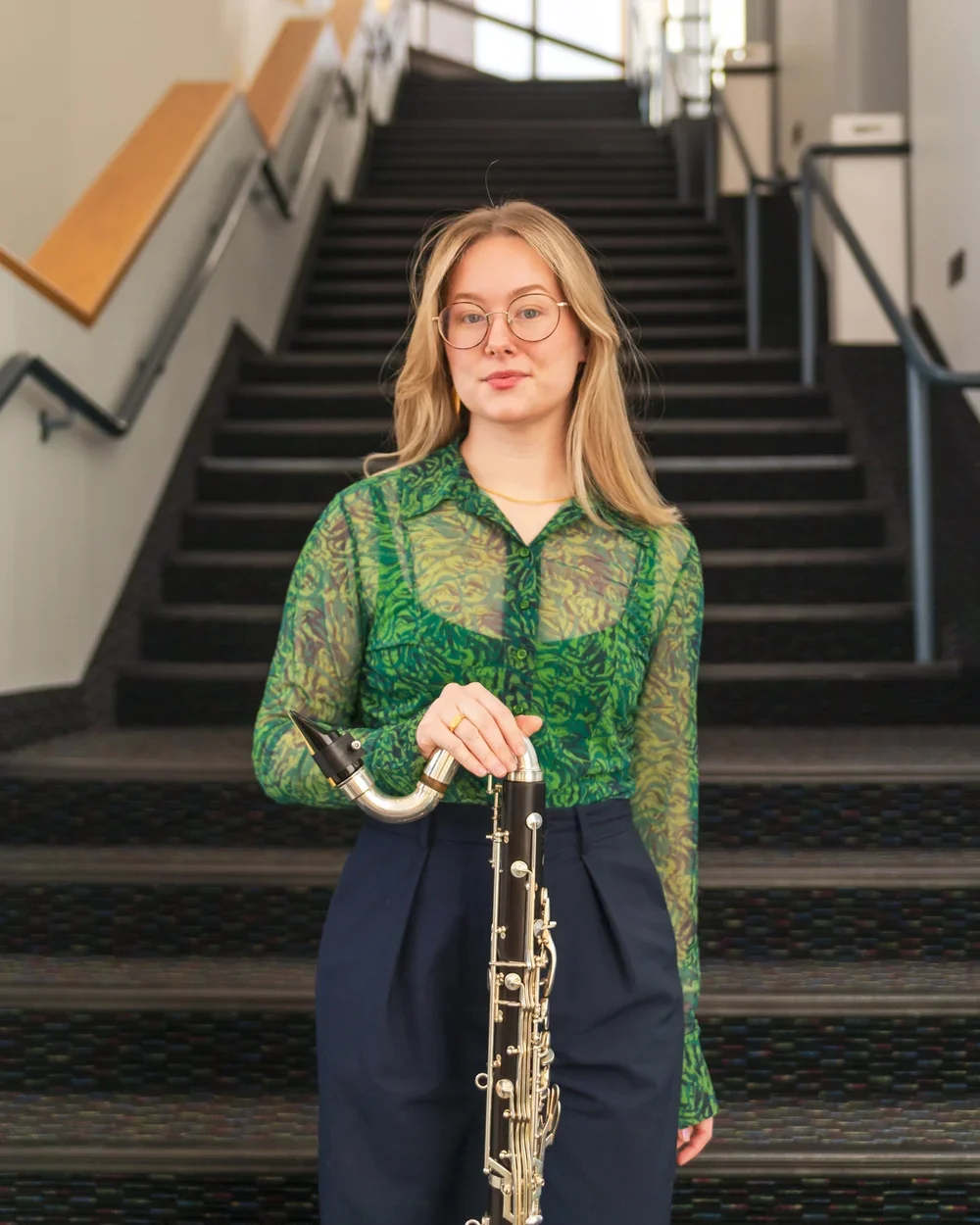
Hannah Faircloth is a clarinetist and visual artist based in Tallahassee, Florida. She is currently pursuing a Doctor of Musical Arts at Florida State University, working as a Graduate Assistant and studying under Dr. Deborah Bish and Dr. Jonathan Holden. Hannah enjoys exploring the intersection of art and music through research, mixed media projects, and collaborative efforts. She often presents her interdisciplinary work at various conferences and events, most recently at the International Clarinet Association’s 2024 ClarinetFest in Dublin, Ireland, and the 2022 Clariedescope virtual event.
A passionate musician, Hannah actively performs with the Solstice Reed Quintet, the Florida State University Symphony Orchestra and Wind Orchestra, Polymorphia, and Southern Winds. She has held positions with the Tallahassee Symphony Orchestra, Bach Festival Orchestra, Southern Illinois Music Festival Orchestra, and Vero Beach Opera Company. She has participated in SIU’s annual Outside the Box Festival as a soloist, visual artist, and member of the SIU Improvisational Unit, and has performed as a featured soloist with the Southern Illinois Symphony Orchestra.
Hannah is a dedicated educator,teaching at Stetson University’s Clarinet Clinic every summer and working with students in Leon County schools. Hannah received her M.M. at Southern Illinois University Carbondale, where she studied with Dr. Eric Mandat, and received her B.M. at Stetson University, where she studied with Dr. Lynn Musco and Dr. Jessica Speak.
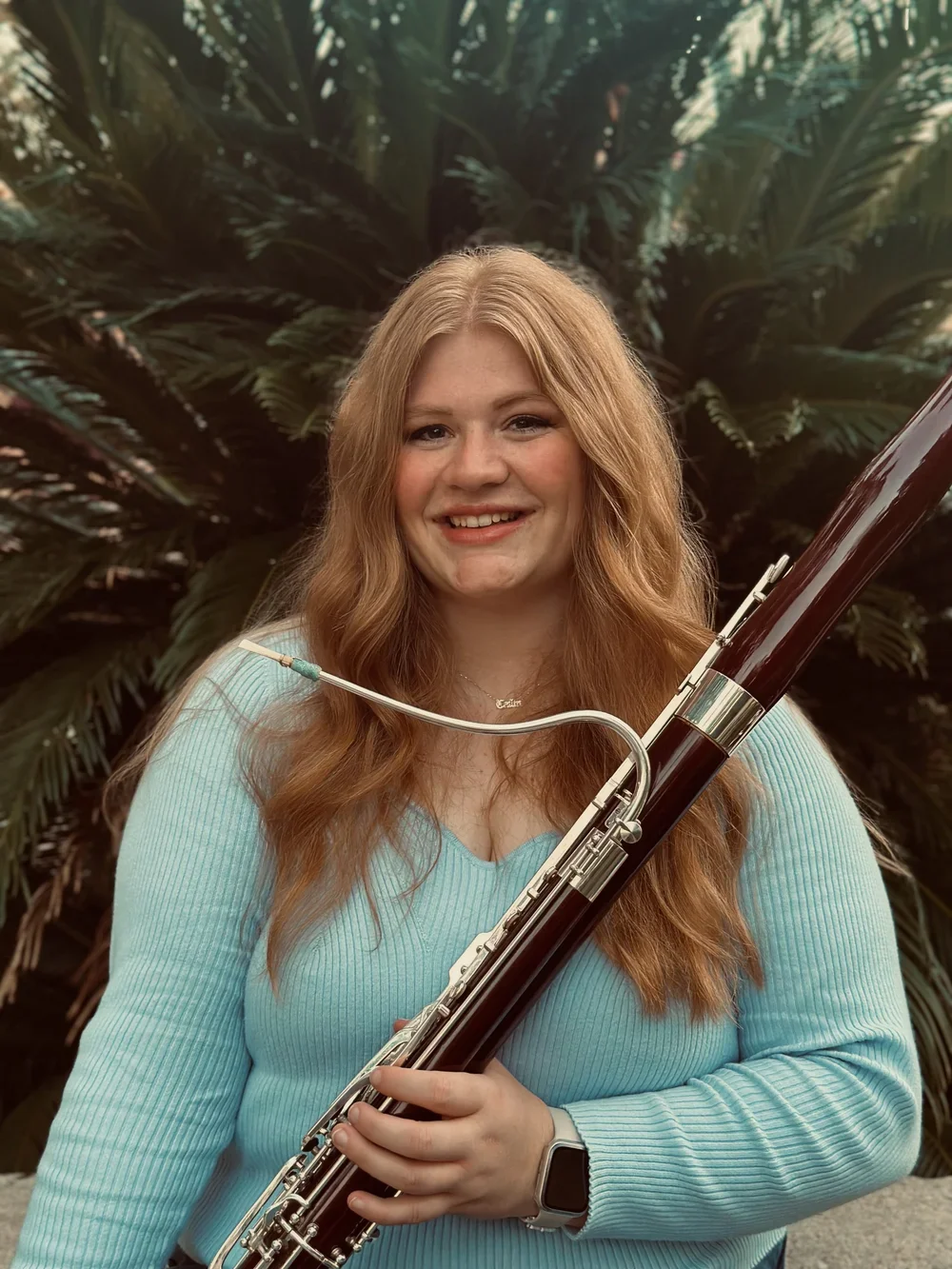
Cailin McGarry is a dedicated musician and educator currently pursuing a Masters degree in Bassoon Performance at Florida State University under the guidance of Professor Jeff Keesecker. As a Graduate Teaching Assistant, she provides personalized bassoon lessons to undergraduate students, facilitates reed-making classes, and contributes to the planning and execution of studio class. Cailin is an active member of the Florida State University’s Orchestra, FSU Opera, Wind Ensemble, and local orchestras in the northwestern Florida area where she shares her musical talents. Previously, she graduated from Utah State University with a degree in Music Education , specializing in band. Cailin’s love for chamber music began with her experience at the Gifted Music School, under the tutelage of Dr. Eugene Watanabe, and during her undergraduate studies, where she participated in the Caine Woodwind Quintet for four years. She loves the intimate and collaborative atmosphere offered in a chamber setting and is beyond excited to be a part of the Solstice Reed Quintet.

ABOUT AKROPOLIS
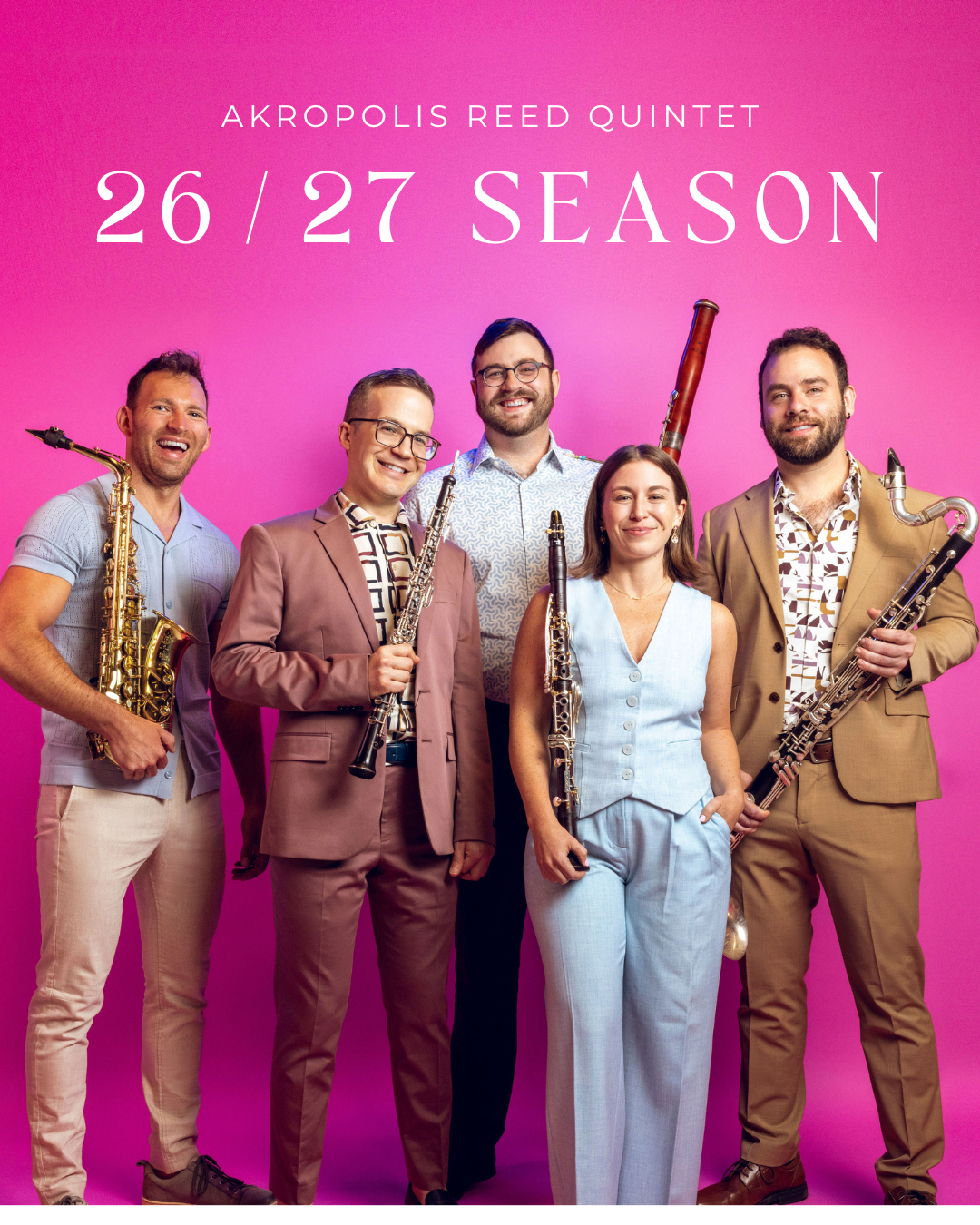
Founded in 2009, the GRAMMY® Award-winning Akropolis Reed Quintet is “a sonically daring ensemble who specializes in performing new works with charisma and integrity” (BBC Music Magazine). Comprising five reed players and entrepreneurs unbounded by limits or categorization, Akropolis has graced the Classical Billboard Charts with each of their last three albums, including #2 in April, 2024, and has won seven national chamber music prizes including the 2014 Fischoff Gold Medal. Having premiered and commissioned more than 200 works by living artists and composers, they are pioneers and champions of a new genre of classical music—the reed quintet.
Composed of the same five members that brought about its founding over 15 years ago at the University of Michigan, they are the first ensemble to receive the University's Paul M. Boylan Alumni Award. Akropolis delivers 120 concerts and educational events worldwide each year at luminary series including Tanglewood, Bravo! Vail, University Musical Society, Chamber Music Northwest, and more. Akropolis became the first ever GRAMMY® winning reed quintet with their 2024 album, Are We Dreaming the Same Dream?, in collaboration with Pascal Le Boeuf and drummer Christian Euman, taking home Best Instrumental Composition for the track “Strands” at the 67th Grammy Awards held in February, 2025.
Utilizing their “sheer musical imagination” (Gramophone), the quintet is also known for powerful collaborations with youth and others within its Southeast Michigan community. Certified as a 510(c)(3) nonprofit organization, Akropolis runs a Detroit-based summer festival called Together We Sound, holds an annual, school year-long music composition residencies at Cass Tech, Martin Luther King, Jr., and Detroit School of Arts high schools, and produces a 10-day Chamber Music Institute focused on artist training and mentorship in Petoskey, MI.
Described as “pure gold” by the San Francisco Chronicle, Akropolis Reed Quintet performs worldwide and is represented exclusively by Ariel Artists.
ABOUT AKROPOLIS CHAMBER MUSIC INSTITUTE
Presented by the GRAMMY® Award-winning Akropolis Reed Quintet, the Akropolis Chamber Music Institute (ACMI) is a week long summer festival held at and in partnership with Interlochen Center for the Arts.
ACMI invites creative composers, innovative performers, and rising ensembles from all over the world to come together for a rigorous week of chamber music, world premieres, and professional development. ACMI's goal is to launch emerging professional musicians' careers as 21st-century artists. We do this through the highest level of performance, dedicated 1-on-1 mentorship, direct collaboration with Akropolis including performing side by side with Akropolis members, and lasting relationships.
For one week, the artists selected will work intensely with Akropolis: living, working, performing, and forming a community as an artistic collective. A true artist’s retreat, ACMI is housed at one of the nation’s foremost arts institutions, Interlochen Center for the Arts, dedicated to developing young artists through its various programs, year-round performances, and lifelong learning opportunities.
The Akropolis Chamber Music Institute is made possible by generous support from Interlochen Center for the Arts and Classical IPR, Michigan Arts & Culture Council, National Endowment for the Arts, Paul M. Angell Family Foundation, Alice M. Ditson Fund, The Aaron Copland Fund for Music, The Amphion Foundation, and with special thanks to Carole Alexander and Janet Averett.
RECENT NEWS
EXPLORE OUR SEASON
WE'D LOVE TO SEE YOU AGAIN!
Support Akropolis
⁎
Support Akropolis ⁎
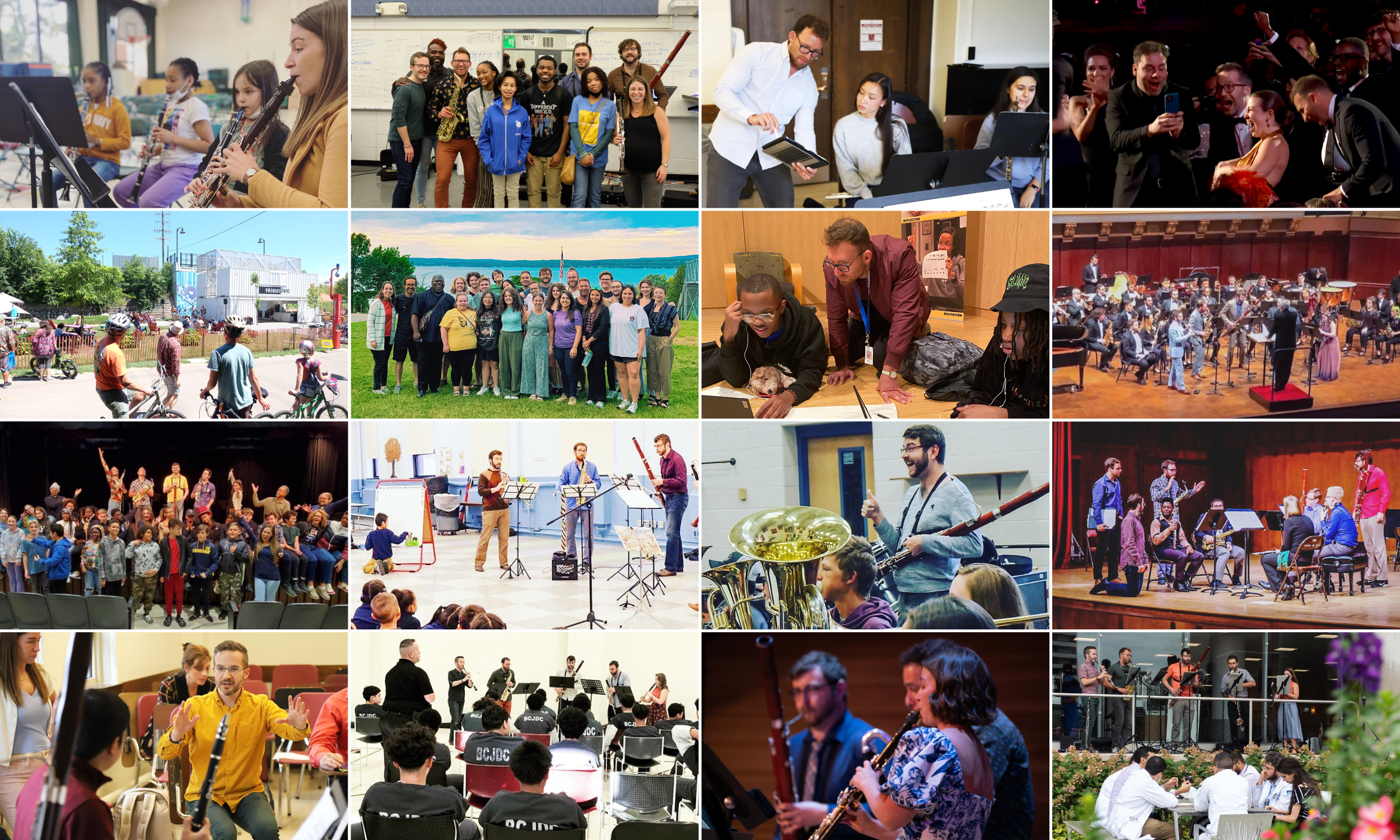
Did you know Akropolis is also a national recognized nonprofit 501(c)(3) organization? Our mission is to create a more vibrant society with greater accessibility to contemporary music through our quintet’s artistic excellence utilized in performances, educational workshops, and community engagement.
We invite you to learn more about how your support makes a difference here online akropolisquintet.org/give
OR you can donate directly below :)
Thank You to Our Supporters